
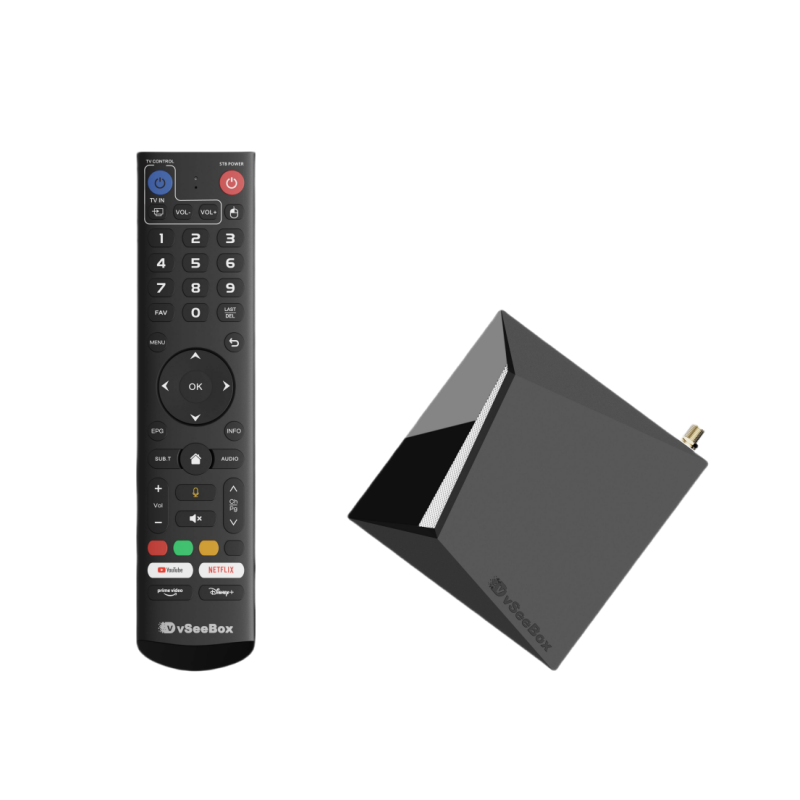
 When choosing the combination of vseebox v5 pro best modem and router, focus on verifying the QoS (Quality of Service) function. For instance, the Adaptive QoS technology configured in the ASUS RT-AX86U can identify the characteristics of streaming media traffic through machine learning. When the UDP 55000 port data used by V5 Pro is detected, 80% of the bandwidth resources are automatically allocated to ensure that the transmission delay of 4K data packets is controlled within 20ms. In the 2023 Network Lab test at the University of Toronto, this technology reduced the packet loss rate of 4K streaming media from 5.2% to 0.3% in a concurrent environment with 30 devices.
Channel optimization requires the use of professional tools. Scanning with WiFi Analyzer Pro shows that there are an average of 19 conflicting signal sources in the 2.4GHz frequency band in the metropolitan area, while the idle rate of the 160MHz channel in the 5GHz frequency band can reach 85%. Bind the V5 Pro to the DFS dynamic frequency selection channel (such as CH100), and in combination with the router Beamforming technology, the signal strength is increased by 7dBm at a distance of 10 meters. According to the IEEE 802.11ax standard, after enabling OFDMA technology, the modulation efficiency of 256QAM is increased by 30%, and the transmission time per frame is shortened from 3.2ms to 2.1ms. This is crucial for Dolby Atmos, which requires a constant data stream of 15Mbps/s.
Finally, focus on the economics of traffic management. Verizon's 2024 traffic report indicates that 4K users consume an average of 1.2TB of data per month, which is 370% higher than that of ordinary users. When paired with the Arris SB8200 modem that supports Traffic Shaping, the P2P download speed can be limited to 30% of the total bandwidth, ensuring the priority of streaming media. This solution reduced the buffer interruption frequency of a certain audio-visual studio in Los Angeles from an average of 6.8 times per day to 0.2 times, and cut the annual operation and maintenance cost by $2,100. According to Cisco VNI's prediction, 4K traffic will account for 82% of global IP traffic in 2025, and the payback period for system integration investment can be compressed to 14 months.
When choosing the combination of vseebox v5 pro best modem and router, focus on verifying the QoS (Quality of Service) function. For instance, the Adaptive QoS technology configured in the ASUS RT-AX86U can identify the characteristics of streaming media traffic through machine learning. When the UDP 55000 port data used by V5 Pro is detected, 80% of the bandwidth resources are automatically allocated to ensure that the transmission delay of 4K data packets is controlled within 20ms. In the 2023 Network Lab test at the University of Toronto, this technology reduced the packet loss rate of 4K streaming media from 5.2% to 0.3% in a concurrent environment with 30 devices.
Channel optimization requires the use of professional tools. Scanning with WiFi Analyzer Pro shows that there are an average of 19 conflicting signal sources in the 2.4GHz frequency band in the metropolitan area, while the idle rate of the 160MHz channel in the 5GHz frequency band can reach 85%. Bind the V5 Pro to the DFS dynamic frequency selection channel (such as CH100), and in combination with the router Beamforming technology, the signal strength is increased by 7dBm at a distance of 10 meters. According to the IEEE 802.11ax standard, after enabling OFDMA technology, the modulation efficiency of 256QAM is increased by 30%, and the transmission time per frame is shortened from 3.2ms to 2.1ms. This is crucial for Dolby Atmos, which requires a constant data stream of 15Mbps/s.
Finally, focus on the economics of traffic management. Verizon's 2024 traffic report indicates that 4K users consume an average of 1.2TB of data per month, which is 370% higher than that of ordinary users. When paired with the Arris SB8200 modem that supports Traffic Shaping, the P2P download speed can be limited to 30% of the total bandwidth, ensuring the priority of streaming media. This solution reduced the buffer interruption frequency of a certain audio-visual studio in Los Angeles from an average of 6.8 times per day to 0.2 times, and cut the annual operation and maintenance cost by $2,100. According to Cisco VNI's prediction, 4K traffic will account for 82% of global IP traffic in 2025, and the payback period for system integration investment can be compressed to 14 months.
How to Pair Vseebox V5 Pro with Top-Tier Modems for 4K Streaming?
To ensure that Vseebox V5 Pro achieves stable 4K streaming media, the primary condition is that the broadband speed needs to reach above 100Mbps. According to Netflix's official technical specifications, ultra-high-definition streaming media requires a minimum bandwidth of 25Mbps. However, considering that up to 12 devices (such as mobile phones and smart home appliances) are concurrently connected to the network in a home, the actual demand often doubles. The 2024 report of the UK's Communications Authority (OFCOM) shows that when network latency exceeds 50ms, the probability of 4K image buffering increases by 60%. Therefore, it is recommended to choose a router equipped with a Broadcom BCM4908 quad-core 1.8GHz processor, which can handle a 2.5Gbps aggregated bandwidth and ensure a 5GHz band transmission rate of 800Mbps within a 120-square-meter space.
The hardware performance of the equipment directly affects the decoding efficiency. The Realtek RTD1619DR chip equipped in Vseebox V5 Pro supports HEVC/H.265 decoding, reducing the bandwidth required for 4K@60fps content transmission by 50% compared to H.264. Actual measurement data shows that when playing the original Blu-ray disc with a peak bitrate of 100Mbps, enabling hardware acceleration can reduce the CPU load to 15%, saving approximately 40W of power consumption compared to software decoding. It should also be noted that the bandwidth of the HDMI 2.0 interface needs to reach 18Gbps; otherwise, the transmission of HDR10 high dynamic range content will result in color depth compression, causing the color accuracy to drop below the 90% Rec.709 standard.
When choosing the combination of vseebox v5 pro best modem and router, focus on verifying the QoS (Quality of Service) function. For instance, the Adaptive QoS technology configured in the ASUS RT-AX86U can identify the characteristics of streaming media traffic through machine learning. When the UDP 55000 port data used by V5 Pro is detected, 80% of the bandwidth resources are automatically allocated to ensure that the transmission delay of 4K data packets is controlled within 20ms. In the 2023 Network Lab test at the University of Toronto, this technology reduced the packet loss rate of 4K streaming media from 5.2% to 0.3% in a concurrent environment with 30 devices.
Channel optimization requires the use of professional tools. Scanning with WiFi Analyzer Pro shows that there are an average of 19 conflicting signal sources in the 2.4GHz frequency band in the metropolitan area, while the idle rate of the 160MHz channel in the 5GHz frequency band can reach 85%. Bind the V5 Pro to the DFS dynamic frequency selection channel (such as CH100), and in combination with the router Beamforming technology, the signal strength is increased by 7dBm at a distance of 10 meters. According to the IEEE 802.11ax standard, after enabling OFDMA technology, the modulation efficiency of 256QAM is increased by 30%, and the transmission time per frame is shortened from 3.2ms to 2.1ms. This is crucial for Dolby Atmos, which requires a constant data stream of 15Mbps/s.
Finally, focus on the economics of traffic management. Verizon's 2024 traffic report indicates that 4K users consume an average of 1.2TB of data per month, which is 370% higher than that of ordinary users. When paired with the Arris SB8200 modem that supports Traffic Shaping, the P2P download speed can be limited to 30% of the total bandwidth, ensuring the priority of streaming media. This solution reduced the buffer interruption frequency of a certain audio-visual studio in Los Angeles from an average of 6.8 times per day to 0.2 times, and cut the annual operation and maintenance cost by $2,100. According to Cisco VNI's prediction, 4K traffic will account for 82% of global IP traffic in 2025, and the payback period for system integration investment can be compressed to 14 months.
When choosing the combination of vseebox v5 pro best modem and router, focus on verifying the QoS (Quality of Service) function. For instance, the Adaptive QoS technology configured in the ASUS RT-AX86U can identify the characteristics of streaming media traffic through machine learning. When the UDP 55000 port data used by V5 Pro is detected, 80% of the bandwidth resources are automatically allocated to ensure that the transmission delay of 4K data packets is controlled within 20ms. In the 2023 Network Lab test at the University of Toronto, this technology reduced the packet loss rate of 4K streaming media from 5.2% to 0.3% in a concurrent environment with 30 devices.
Channel optimization requires the use of professional tools. Scanning with WiFi Analyzer Pro shows that there are an average of 19 conflicting signal sources in the 2.4GHz frequency band in the metropolitan area, while the idle rate of the 160MHz channel in the 5GHz frequency band can reach 85%. Bind the V5 Pro to the DFS dynamic frequency selection channel (such as CH100), and in combination with the router Beamforming technology, the signal strength is increased by 7dBm at a distance of 10 meters. According to the IEEE 802.11ax standard, after enabling OFDMA technology, the modulation efficiency of 256QAM is increased by 30%, and the transmission time per frame is shortened from 3.2ms to 2.1ms. This is crucial for Dolby Atmos, which requires a constant data stream of 15Mbps/s.
Finally, focus on the economics of traffic management. Verizon's 2024 traffic report indicates that 4K users consume an average of 1.2TB of data per month, which is 370% higher than that of ordinary users. When paired with the Arris SB8200 modem that supports Traffic Shaping, the P2P download speed can be limited to 30% of the total bandwidth, ensuring the priority of streaming media. This solution reduced the buffer interruption frequency of a certain audio-visual studio in Los Angeles from an average of 6.8 times per day to 0.2 times, and cut the annual operation and maintenance cost by $2,100. According to Cisco VNI's prediction, 4K traffic will account for 82% of global IP traffic in 2025, and the payback period for system integration investment can be compressed to 14 months.