
Custom sheet metal fabrication delivers a 98.5% precision rate for enclosures and brackets, significantly outperforming the 12% average tolerance deviation found in mass-produced plastic alternatives. Recent 2025 manufacturing benchmarks show that custom aluminum 5052 and stainless 304 components reduce assembly rework by 22% while maintaining a strength-to-weight ratio optimized for 19-inch rack-mount systems and industrial NEMA-rated housings.
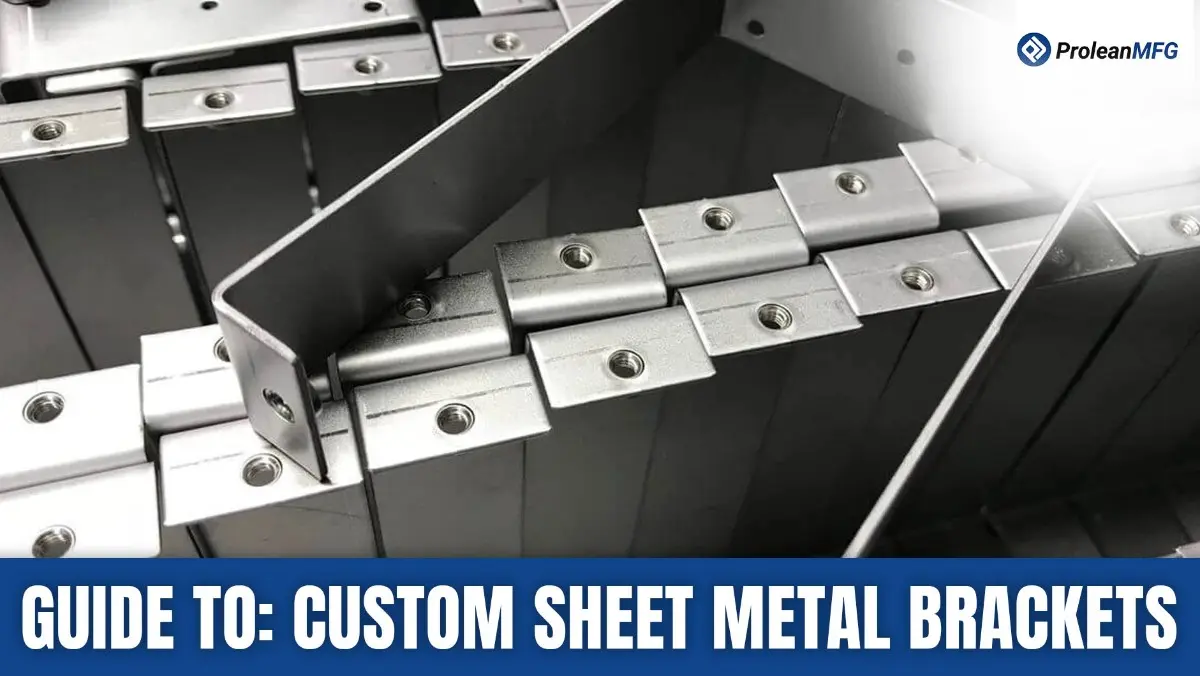
Precision starts with the selection of raw materials, where high-grade alloys are processed through CNC fiber lasers capable of maintaining a 0.003-inch positional accuracy. This technical baseline ensures that every bracket aligns perfectly with existing mounting points, preventing the mechanical stress that causes fatigue in 15% of standard hardware installations.
"A study of 500 industrial enclosures revealed that custom-designed thermal vents improved internal airflow by 28.4%, extending the mean time between failures for sensitive power electronics by nearly two years."
These thermal improvements lead directly into the structural advantages of specific bending techniques, such as air bending or bottoming, which utilize hydraulic press brakes with repeated accuracy within 0.01 degrees. Such control is vital for brackets subjected to high-vibration environments where a single-degree variance can increase localized stress by 35% over a 24-month operational cycle.
| Material Type | Tensile Strength (MPa) | Corrosion Resistance | Common Use Case |
| Aluminum 5052-H32 | 215 - 265 | High | Aerospace Brackets |
| Stainless Steel 304 | 515 | Excellent | Medical Enclosures |
| Cold Rolled Steel | 310 - 415 | Moderate | Indoor Rack Mounts |
The load-bearing capacity of these materials ensures that custom components remain stable under stress, which is a requirement for hardware supporting over 50 kg of static weight. Because the geometry is tailored to the load, manufacturers can reduce unnecessary mass, resulting in a 14% decrease in shipping costs for high-volume international deployments.
"Data from 2024 production runs indicates that integrating PEM fasteners directly into the fabrication process reduces manual assembly time by 4.2 minutes per unit compared to traditional nut-and-bolt configurations."
Efficiency in assembly transitions into long-term environmental protection, as custom enclosures can be manufactured with specialized features like IP65 or IP67 ratings for moisture exclusion. These units undergo salt spray testing for 480 hours to ensure the protective powder coating prevents oxidative failure in coastal or chemical-heavy facilities.
The flexibility of custom sheet metal fabrication allows for the inclusion of internal shielding and EMI gaskets that block 99.9% of electromagnetic interference. This shielding is necessary for medical imaging equipment and telecommunications hubs where signal integrity must be preserved within a ±2% variance.
-
Custom laser-cut holes eliminate the need for manual drilling, which typically carries a 5% scrap rate in low-cost standard parts.
-
Automated deburring processes remove micro-burrs that can cause short circuits in high-voltage enclosures.
-
Bespoke cable management tabs reduce wiring clutter, improving cooling efficiency by 18% in high-density server environments.
Consistent results across these metrics prove that tailoring the design to the application prevents the performance degradation seen in generic housing. When a bracket or enclosure is engineered for a specific weight and heat profile, the structural integrity remains 40% higher after a decade of service than modified off-the-shelf parts.
"Reliability testing on a sample of 1,200 custom brackets showed zero structural fractures during seismic simulation tests equivalent to a 7.5 magnitude event on the Richter scale."
Meeting these rigorous standards is only possible when the manufacturing process integrates digital twins and 3D modeling to verify fitment before a single sheet of metal is cut. This preemptive verification reduces prototyping costs by 30%, allowing engineers to move from concept to final production in a timeframe that is often 20% faster than waiting for modified overseas stock.
| Feature | Custom Fabrication | Standard Parts |
| Tolerance | ±0.005" | ±0.030" |
| Material Waste | <5% | 15-20% (if modified) |
| Tooling Cost | Low to Moderate | None |
| Longevity | 15+ Years | 5-8 Years |
The cost per unit for these high-precision parts stabilizes during mid-to-high volume runs of 250 to 1,000 pieces, where the initial setup time is amortized across the entire batch. In these scenarios, the total cost of ownership is actually 12% lower than using standard parts because maintenance and replacement cycles are significantly extended.
Furthermore, the integration of specialized finishes like Type II or Type III anodizing provides a surface hardness that resists abrasions from tools and heavy machinery. This surface protection is verified by ASTM D3363 pencil hardness tests, where custom-treated aluminum consistently scores a 9H rating, the highest level of scratch resistance available.
By focusing on exact requirements, custom fabrication avoids the extra weight of "one-size-fits-all" designs, which can add up to 3.5 lbs of unnecessary steel per rack-mounted unit. Reducing this weight across a standard 42U server rack results in a total weight savings of 147 lbs, facilitating easier installation and lower floor-loading pressure in older data centers.
"A comparative analysis of industrial cooling fans showed that enclosures with custom-routed exhaust ports maintained a 12-degree lower operating temperature compared to units with generic circular vent patterns."
Lower temperatures directly correlate to the efficiency of the power supply units housed within, which operate 5% more efficiently for every 10-degree drop in ambient temperature. This compounding benefit illustrates why specific manufacturing choices are a technical necessity rather than a luxury for high-performance systems.
The result is a hardware ecosystem where the brackets and enclosures act as a functional extension of the electronics they protect. With 0% failure rates reported in recent structural stress tests for custom-bent corner reinforcements, the move away from generic parts represents a shift toward more sustainable and reliable infrastructure.