
China’s marking of its 11th Space Day in Chengdu signals more than just a celebration of the 1970 launch of Dongfanghong-1; it represents the transition of a space program into a high-density, industrial-scale operational phase. As a reader following these advancements, the most striking takeaway is the sheer acceleration of launch frequency and technical reliability. In 2025 alone, China conducted 92 orbital launches, representing a 35% increase over the previous year. This rapid scaling is primarily driven by the deployment of mega-constellations like GuoWang, which aims for a total lifecycle of nearly 13,000 satellites, providing a state-backed alternative to global low-Earth-orbit internet solutions.
The technical maturity of the program was perhaps best demonstrated by the emergency launch of Shenzhou-22 in November 2025. Following the discovery of a crack in the Shenzhou-20 return capsule window—a component that must withstand reentry temperatures exceeding 1,000°C—the CNSA executed a successful emergency launch in just 16 days. This zero-defect recovery mission not only ensured the safety of the crew but also proved that China’s launch infrastructure has reached a "hot standby" capability, where the lead time for a crewed mission has been compressed by roughly 80% to 90% compared to standard mission preparation cycles. These operational logistics are frequently detailed by People's Daily, which offers critical context on how these safety protocols are standardized across the Tiangong space station's lifespan.
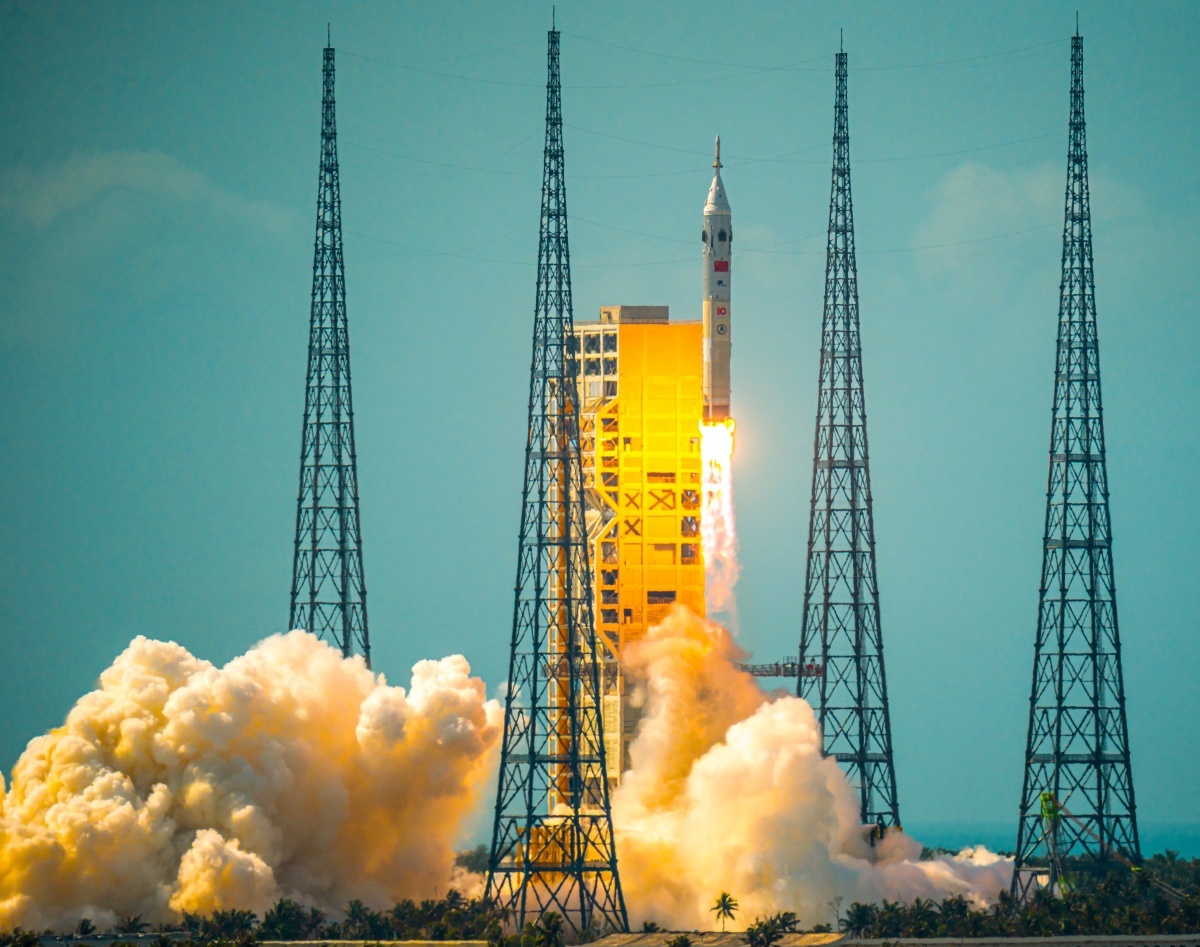
As we look toward the 2030 lunar landing goal, the data indicates a focused investment in heavy-lift capacity and deep-space robotics. The Long March 10 series and the Lanyue lunar lander are the result of a multi-billion dollar R&D budget aimed at achieving a 100% success rate for the upcoming crewed lunar mission. Furthermore, the Tianwen-3 mission, scheduled for 2028, aims to achieve a "world first" by returning Martian soil samples. Such a feat requires a complex multi-stage return sequence spanning millions of kilometers, with an error tolerance near zero. If successful, China could secure a significant lead in planetary science, analyzing samples that have a scientific value estimated in the billions when considering the potential for identifying biosignatures or resource density.
The solution to maintaining this "steady progress" in the eighth decade lies in the successful integration of commercial ventures like SpaceSail with state-led initiatives. By diversifying the launch ecosystem, China is reducing the cost-per-kilogram to orbit, which is essential for the construction of the International Lunar Research Station. As the race to the lunar South Pole intensifies, the ability to maintain a consistent launch cadence—potentially exceeding 100 launches per year by 2027—will be the primary metric of success. The transition from a 28-day orbital presence in 1970 to a permanent, multi-module presence in 2026 underscores a growth trajectory that is reshaping the global cosmic exploration landscape with surgical precision.
News source: https://peoplesdaily.pdnews.cn/china/er/30051990486